Two numbers decide whether a busy day is a good day. Conversion rate tells you how many of the people who walked in actually bought something. Average order value tells you how much each of those buyers spent. Multiply them by traffic and you have revenue. Move either one and the whole line moves.
Most operators track both and optimize neither, because the levers are scattered across departments and nobody holds the full map. Merchandising owns some of it, staffing owns some, the POS configuration owns some, and one lever — the feel of the room — is owned by nobody at all.
This is that map: what each number measures, the levers that move it, and where the parts that are usually ignored actually sit.
What is conversion in retail? #
Conversion rate is the percentage of store visitors who make a purchase. If 200 people walk in and 40 buy, your conversion rate is 20 percent. It requires two numbers most stores have separately and rarely divide: a traffic count (a door counter, or a camera estimate) and transactions (your POS).
Typical brick-and-mortar conversion runs wide by format — value and convenience formats convert high because intent is high, while browse-heavy specialty retail converts lower because more visits are exploratory. The absolute number matters less than the trend. A store that knows its conversion rate moved from 18 to 21 percent after a change knows something. A store that has never computed it is flying blind on its single most important efficiency metric.
The levers that move conversion #
Traffic quality. Not everyone who walks in is a buyer. Marketing that pulls in the wrong visitors lowers conversion even as it raises traffic. The fix is upstream of the floor.
Friction at decision points. Fitting-room availability, queue length, out-of-stocks, and confusing layout convert intent into exit. This is the lever with the cleanest before-and-after metrics, which is why consultants love it.
Staff engagement timing. The high-leverage moment is not the entry greeting; it’s the second engagement, when a customer has lingered at a display without moving to checkout. Acting on it requires staffing density, not just training.
Merchandising and pathing. Pulling browse-worthy product deeper into the floor gives customers a reason to walk in rather than turn around at the door.
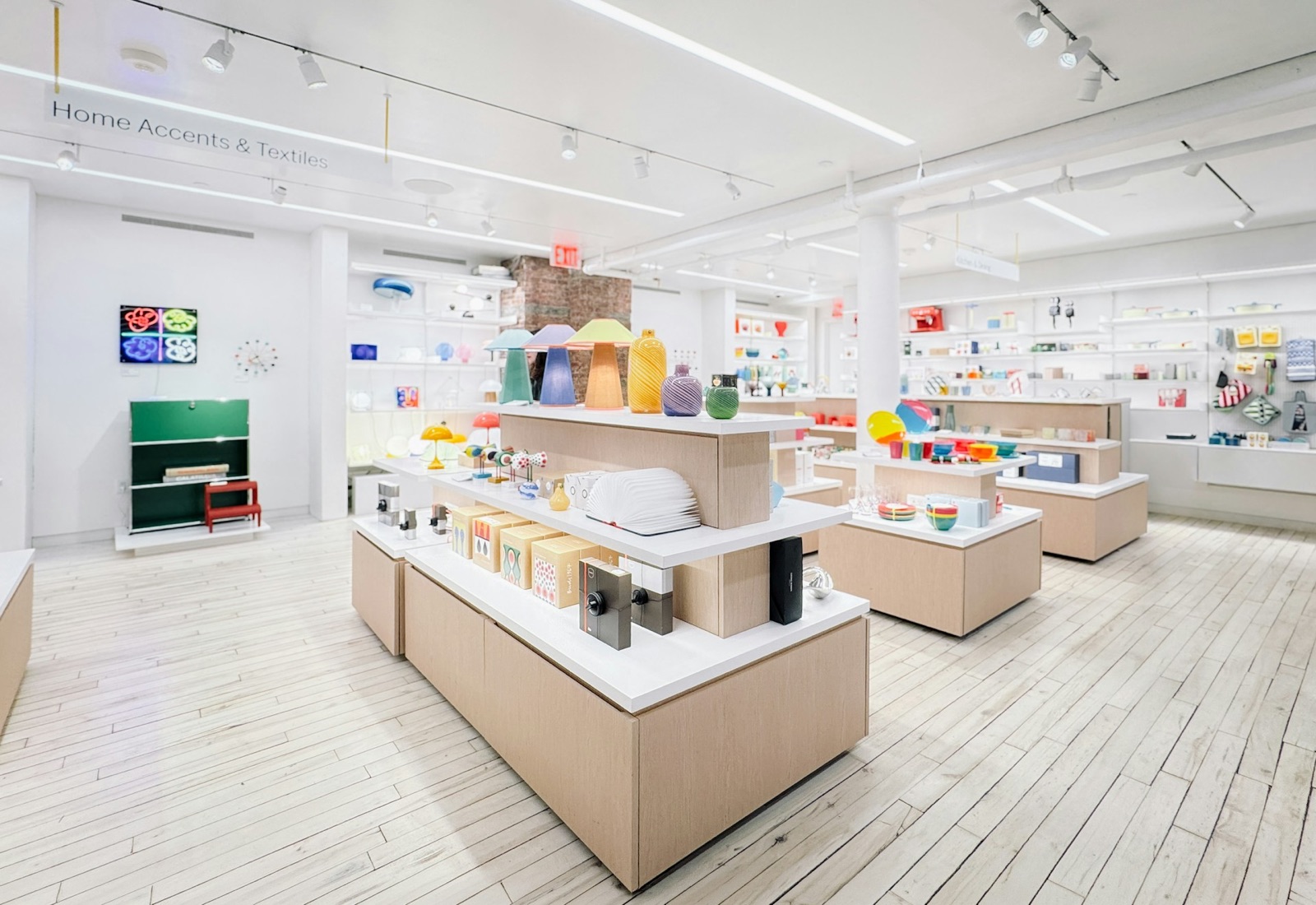
The feel of the environment. A store that feels like a place worth being in converts better than one that signals “this is just a store.” Lighting and layout get managed for this; the audio almost never does. That is the gap.
What is average order value (AOV)? #
Average order value is total revenue divided by number of transactions over a period. If you did $10,000 across 200 sales, your AOV is $50. It answers a different question than conversion: not how many people bought, but how much each buyer spent.
AOV is the lever that compounds fastest because it falls straight to the bottom line. Lifting conversion costs you more inventory turns and more staff attention. Lifting AOV on the customers you already converted is close to free margin — you’ve already paid the rent and the marketing to get them through the door.
The levers that move AOV #
Basket-building. Attachment and add-on prompts at the moment of decision — the complementary item, the care kit, the second pair. Mostly a staff-behavior and merchandising lever.
Price architecture. Good-better-best tiers, bundle pricing, and anchoring move the average ticket without raising any single price. This is the cleanest AOV lever and the most under-used in small retail.
Willingness to pay. The least obvious lever, and the one the sound environment touches directly. Areni and Kim (1993) found that classical music in a wine cellar moved shoppers toward more expensive bottles — they bought pricier items, not more of them. North and Hargreaves showed musical fit could steer product choice entirely, with shoppers unaware. When the environment signals a context where spending more feels appropriate, AOV moves on its own.
Lifting AOV on customers you already converted is close to free margin. You've already paid the rent and the marketing to get them through the door.
Where the sound environment fits across both #
The store’s audio is the only lever that sits across both numbers at once. It slows the floor and extends time per visit, which gives more chances to convert — Milliman’s 1982 study put the sales lift at up to 38 percent. It shifts willingness to pay, which lifts AOV (Areni and Kim 1993). It bends the perception of time, so a checkout queue that would have cost you a sale feels shorter than it is (Yalch and Spangenberg 2000).
And it is the cheapest lever in the building, because it changes in software rather than in fixtures, floor plans, or headcount. The reason it gets ignored isn’t that it doesn’t work — it’s that the commercial music industry spent thirty years selling operators a catalog and a genre picker, then reporting back on play counts. Nobody handed the operator a tool that lets them pick the outcome and have the sound configured to support it.
| Metric | What it measures | Primary levers | Where audio helps |
|---|---|---|---|
| Conversion rate | Share of visitors who buy | Friction, staff timing, merchandising, environment feel | Extends dwell — more time on the floor to convert |
| Average order value | Spend per buyer | Basket-building, price architecture, willingness to pay | Signals a context where spending more feels right |
The discipline: never optimize one blind to the other #
A change that lifts conversion can quietly lower AOV — drop prices and more people buy, but each spends less. A change that lifts AOV can lower conversion — push premium product and the average ticket rises while some buyers walk. The only honest read is to watch both, plus the traffic and dwell that feed them.
The good news is that all of it is computable from data you already own. Pull a baseline: traffic, transactions, conversion, average basket. Change one variable. The audio environment is the easiest to change because it carries no operational lift. Run it two weeks under similar conditions and pull the same numbers. If conversion or AOV moves directionally, you have evidence to extend. If nothing moves, you’ve learned the audio wasn’t your binding constraint, without spending capital to find out.
For the deep playbooks on each number, see retail conversion rate: the five levers and how to increase average order value in retail. The dwell mechanic that feeds both is in how to increase dwell time in retail stores, and the math on why longer visits don’t automatically mean bigger receipts is in longer visits don’t mean bigger receipts. For the research behind the willingness-to-pay lever, see the margin you’re leaving on the table. The complete strategy hub is the full retail conversion rate guide.