How to Increase Dwell Time in Retail Stores
Dwell time is the measurement of how long customers spend in your store. The longer they browse, the more products they see, and the more likely they are to buy. A retail-analytics industry estimate puts the relationship at roughly a 1.3% increase in sales for every 1% increase in dwell time.
• Industry estimate: a 1% increase in dwell time correlates with ~1.3% increase in sales
• Music tempo directly controls walking speed — Milliman study, replicated across retail formats
• Slow tempo + minor key + sparse arrangement produces the strongest dwell extension
• Music compresses perceived time — 20 minutes of browsing feels like 10 in the right environment
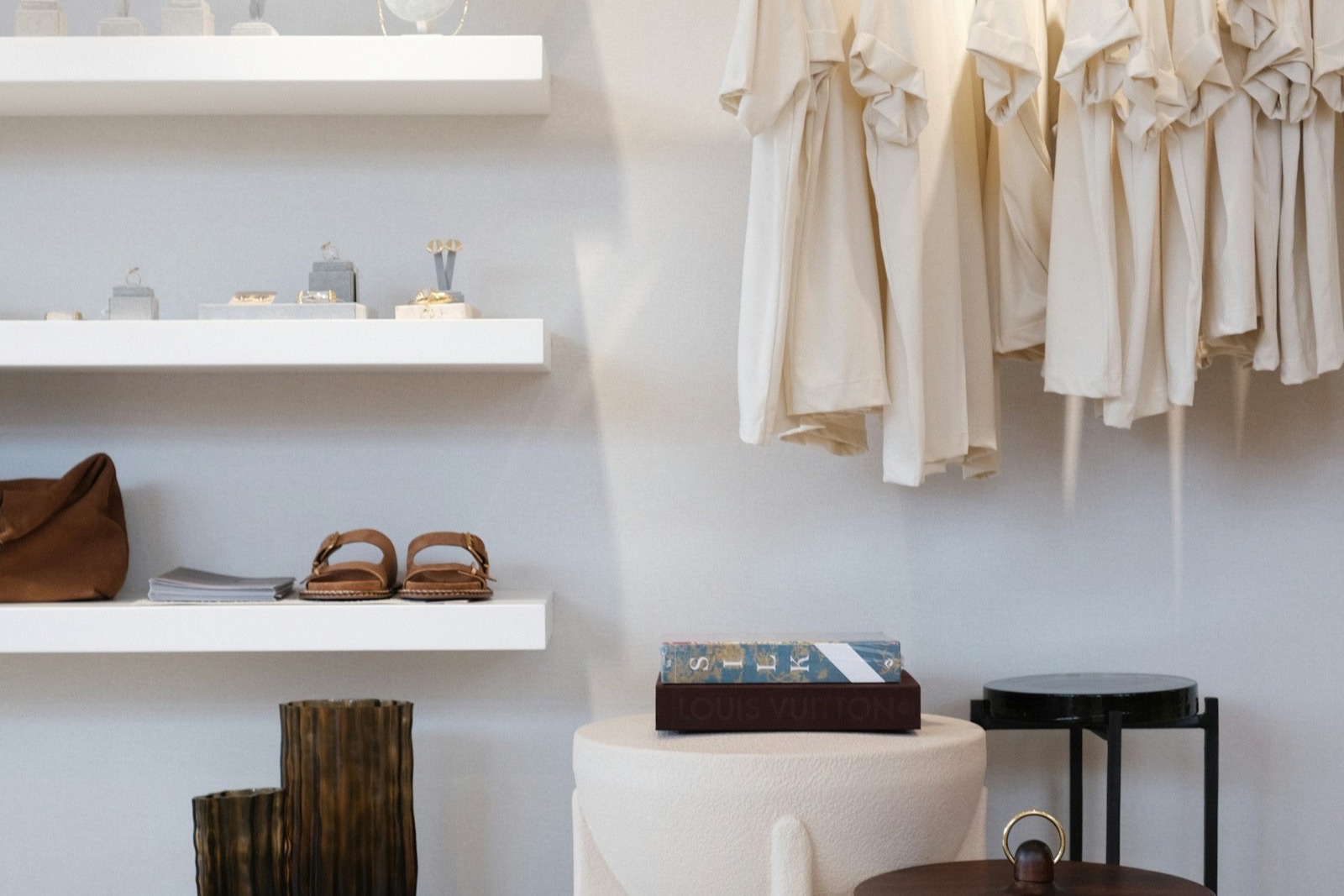
Layout, Displays, and the Physical Environment
The established approaches to dwell time optimization are well-proven.
Store layout should create a natural flow that exposes customers to maximum product surface area. The decompression zone, the first 5-15 feet inside the entrance, should give customers time to adjust before presenting merchandise. Pathways should be wide enough to browse comfortably but narrow enough to keep products within arm's reach.
Interactive displays, fitting rooms, and discovery zones all increase dwell time by giving customers a reason to stop moving. Every pause point is an opportunity for a product to catch someone's eye.
Comfortable temperature, good lighting, and clean sightlines contribute to a space people want to be in. Uncomfortable environments push people toward the exit.
All of these work on the spatial dimension of the experience. They shape where customers go and what they see. But they don't directly control how fast customers move, how relaxed they feel, or how much time they perceive has passed. That's where sound comes in.
Music Tempo and the Pace of Shopping
One of the oldest and most replicated findings in retail music research is the relationship between tempo and shopping speed. Dr. Ronald Milliman's foundational study showed that customers in a grocery environment walked significantly slower when slow-tempo music was playing compared to fast-tempo music. They also spent more, because they encountered more products during their longer browsing time.

Subsequent studies have confirmed the effect across retail formats. Slower music leads to longer visits. The mechanism is straightforward: tempo acts as an unconscious pacemaker. Customers synchronize their movement to the beat without realizing it.
Milliman's finding (confirmed across retail formats): Slow-tempo music → slower walking speed, longer visits, higher total spend. One of the most replicated results in consumer behavior research.
But tempo alone is crude. A 70 BPM track in a major key with bright, poppy production doesn't slow people down the same way as a 70 BPM track in a minor key with spacious, contemplative production. The mode, major versus minor, and the sonic density, how much is happening in the mix at once, modify the tempo effect. Sparse, minor-key music at slow tempos produces the most pronounced dwell extension. Dense, major-key music at the same tempo produces almost none.
For a store owner, the practical implication is: the playlist you're running has a tempo profile, whether you planned it or not. If you're playing an uptempo pop station during your slow weekday afternoons when you want customers lingering and discovering new products, you're working against yourself.
Perceived Time and Why It Matters
Dwell time has a secondary mechanism worth understanding. Music doesn't just change how long customers stay. It changes how long they feel like they've been there.
When customers enjoy the ambient environment, their perception of elapsed time compresses. Twenty minutes of browsing feels like ten. The inverse is also true: irritating, mismatched, or absent music makes time feel longer. Ten minutes of browsing in an uncomfortable sonic environment feels like twenty.
This matters because customers leave when they feel like they've been shopping long enough, and that feeling is subjective. Two stores with identical layouts, identical product, and identical foot traffic can produce different dwell times purely based on whether the sonic environment makes time feel compressed or expanded.
Most retailers underestimate this effect because it's invisible. No customer walks out and says "your music made me feel like I'd been here too long." They just leave earlier than they would have in a better-calibrated environment.
No customer walks out and says "your music made me feel like I'd been here too long." They just leave earlier than they would have — and you attribute it to traffic, season, or pricing.
Calibrating Dwell Time With Entuned
Entuned's Dwell outcome deploys music specifically engineered to extend dwell time: slower tempos, minor-key bias, spacious arrangements, and lyrical content oriented toward exploration and self-reflection. The parameters are calibrated to your store's brand profile, so the music still fits your positioning while working toward the behavioral outcome.
The weekly refresh cycle, 2-3 hours of new music per week, prevents the fatigue problem that kills dwell time for stores running the same playlist month after month. Your staff stays engaged, your customers hear something different on repeat visits, and the sonic environment stays fresh.
Entuned also supports Outcome Scheduling, deploying different outcomes at different times of day. During a busy Saturday afternoon when the store is already full, you might switch from Dwell to Keep It Moving to increase throughput. During a quiet Tuesday morning, Dwell keeps the few customers you have browsing longer. Most stores run one setting all day; Outcome Scheduling is how you match the setting to the hour instead.
Try Entuned Free. Set a dwell time target for your store.
Start Free