Conversion rate is the metric that compresses every operational decision in the store into one number. Floor layout, merchandising, staffing, the checkout queue, the audio environment, the temperature, the lighting — all of it ends up as either a customer who bought something or a customer who walked.
Most operators look at the monthly number, see it drift, and reach for the lever they reach for every quarter. Run a promotion. Restage the front window. Add a register. Each is real. Each is also slow, and each can mask the lever that was actually binding.
This is a field guide to the five levers that move retail conversion, ranked by where the cheapest tests sit and where the longest cycles are.
What is a good retail conversion rate? #
Conversion benchmarks vary widely by category and format.
Mass-market value retail. 30 to 50 percent is typical. The customer comes in with intent. The format converts on volume.
Specialty apparel, beauty, accessories. 20 to 35 percent. Browsing-driven, consideration-heavy, more sensitive to in-store experience.
Furniture, jewelry, big-ticket specialty. 8 to 25 percent. The consideration cycle is long. Conversion math reads more clearly in close rate over a 30-day window than in same-visit transactions.
Mall versus street-front in the same brand. Up to a 15-point spread. The traffic is different, the customer intent is different, and the right benchmark for one location is not the right benchmark for the other.
The right comparison is not your category average from a trade publication. It is your store today versus your store six months ago, segmented by time of day. The leverage shows up in the hourly noise band, not the monthly headline.
Lever 1: Traffic quality #
The lever you most directly influence with marketing and least directly influence with operations. Customers who walk in matching the store’s customer profile convert at a higher rate than walk-bys who wandered in to escape the rain.
Traffic quality is the conversation marketing, real estate, and merchandising teams own. Operations inherits the rate they generate. The thing operations can control is what happens to the qualified customers who do walk in. The other four levers all sit there.
Lever 2: Floor merchandising and adjacency #
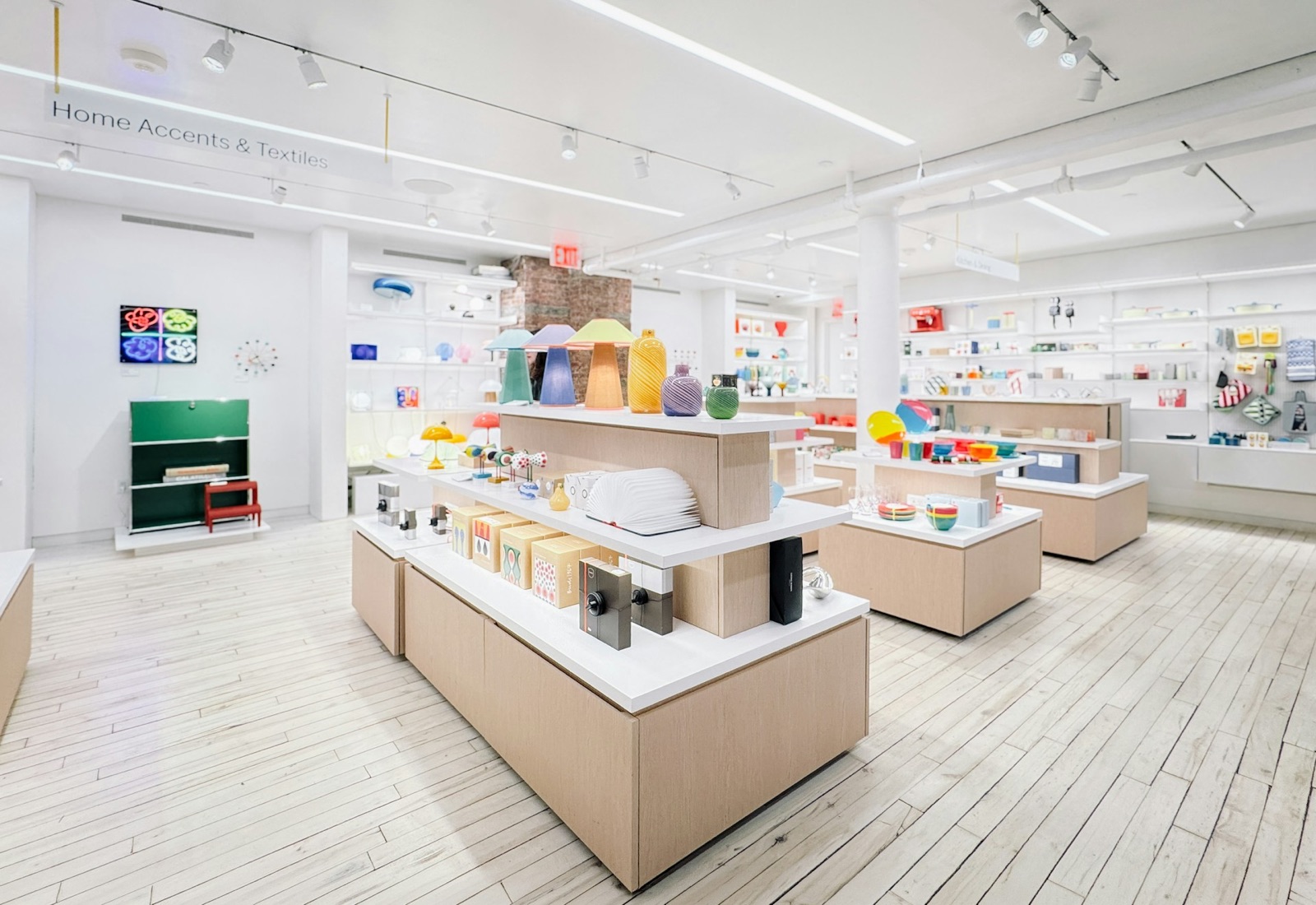
The merchandising plan determines where the customer’s attention goes once they’re inside. A customer who walks past the right product without seeing it does not convert. A customer who sees the right product but cannot find a price tag, a size, or an adjacent reason to consider does not convert. A customer who feels visually overwhelmed and cannot focus does not convert.
This is the lever larger fleets handle well with dedicated VM teams. It is the lever where smaller operators most often ship a planogram once and leave it for two seasons. The cycle time on revisiting it is weeks, not quarters, and the cost is an afternoon of moving fixtures.
Lever 3: Staff confidence and timing #
Trained staff close. Untrained staff ring up the customers who already decided.
The two failures here are mistimed engagement (too early, customer retreats; too late, customer exits) and undertrained handling (the customer asks a product question, the associate doesn’t know the answer, and the consideration collapses). Both compound across a shift. Both are addressable in training, but training is a quarter to ship and ongoing to maintain.
The faster lever is staffing density. A store with one associate covering the floor cannot run second-engagement timing. A store with three can. The conversion math depends on whether you have the labor budget to act on the timing window.
Lever 4: The audio environment #
Music does not directly close a sale. It does something more upstream and more easily missed. It changes how long customers stay, how comfortable they feel browsing, and what price band they anchor to.
The conversion-rate path looks like this. A customer walks in. The first 90 seconds determine whether they stay long enough for the second engagement window — the moment a trained associate would otherwise approach them. Audio that feels too loud, too off-tone, or too jarring shortens those 90 seconds. The customer leaves before reaching the staff window. The conversion never happens, and the floor team never knows why.
The reverse is also true. Audio that holds a customer in the consideration moment buys time for the rest of the sales process to work. Yalch and Spangenberg’s 2000 study found unfamiliar music made shopping trips feel shorter than they were. Customers stayed longer. The staff engagement window was reached. The conversion math improved.
The audio environment does not produce conversions on its own. It produces the time and emotional state in which conversions happen. That is why it is the most leveraged of the five for the operator who has not deliberately set it.
Lever 5: Friction at decision points #
The fitting room with no associate. The checkout queue past three minutes. The product without a clear price. The fixture that blocks the path to the cash wrap. Each is a moment where the customer was ready to convert and the store made it harder than it needed to be.
Friction reduction at the close is the lever that operations teams handle well when they think to look. It usually rewards a Saturday-afternoon walk more than a strategic project.
Music does not close a sale. It buys the time in which the close happens.
How to test this in two weeks #
Conversion rate is one of the cleanest retail metrics to read at the hour-of-day level. Pull it for a baseline week — by hour, by day of week, by store if you have multiple. That is your control.
Change one variable for the next two weeks. The audio environment is the easiest to change because it has no operational cost — no fixture moves, no staffing changes, no training. Pull conversion the same way at the end of week three.
If conversion moves outside your normal week-over-week noise band, you have a signal worth running for a quarter. If it does not, you have learned that for your customer profile, audio was not the binding constraint, and you can move to merchandising or staff timing without spending capital first.
The discipline is to test one lever at a time. Operators who try three at once see a result and have no idea which lever produced it.
Where to start this week #
Three actions, in order.
Walk your store as a customer. Not as a manager checking fixtures. Time how long it takes you to reach a staff member from entry. Note where the path felt confusing, where the displays felt stale, where the audio felt loud or off. That is your leak diagnosis. It is faster and more honest than any dashboard.
Pull two weeks of conversion by time of day from your POS. Get familiar with the noise band before you change anything.
Run a free audio pilot. Entuned Free gives you mood-tuned music for no credit card, no time limit. Run it for two weeks against the baseline. If conversion moves at the hour-of-day level, you have evidence. If it does not, you have ruled out one lever cleanly.
For more on dwell as a precondition for conversion, see how to increase dwell time in retail stores. For the AOV side of the same operational picture, see how to increase average order value in retail. For the broader case on retail music ROI, see how to measure the ROI of in-store music. The full pricing page walks through what each tier includes. For the comprehensive breakdown of how to move your store’s conversion rate, see how to improve retail conversion rate.