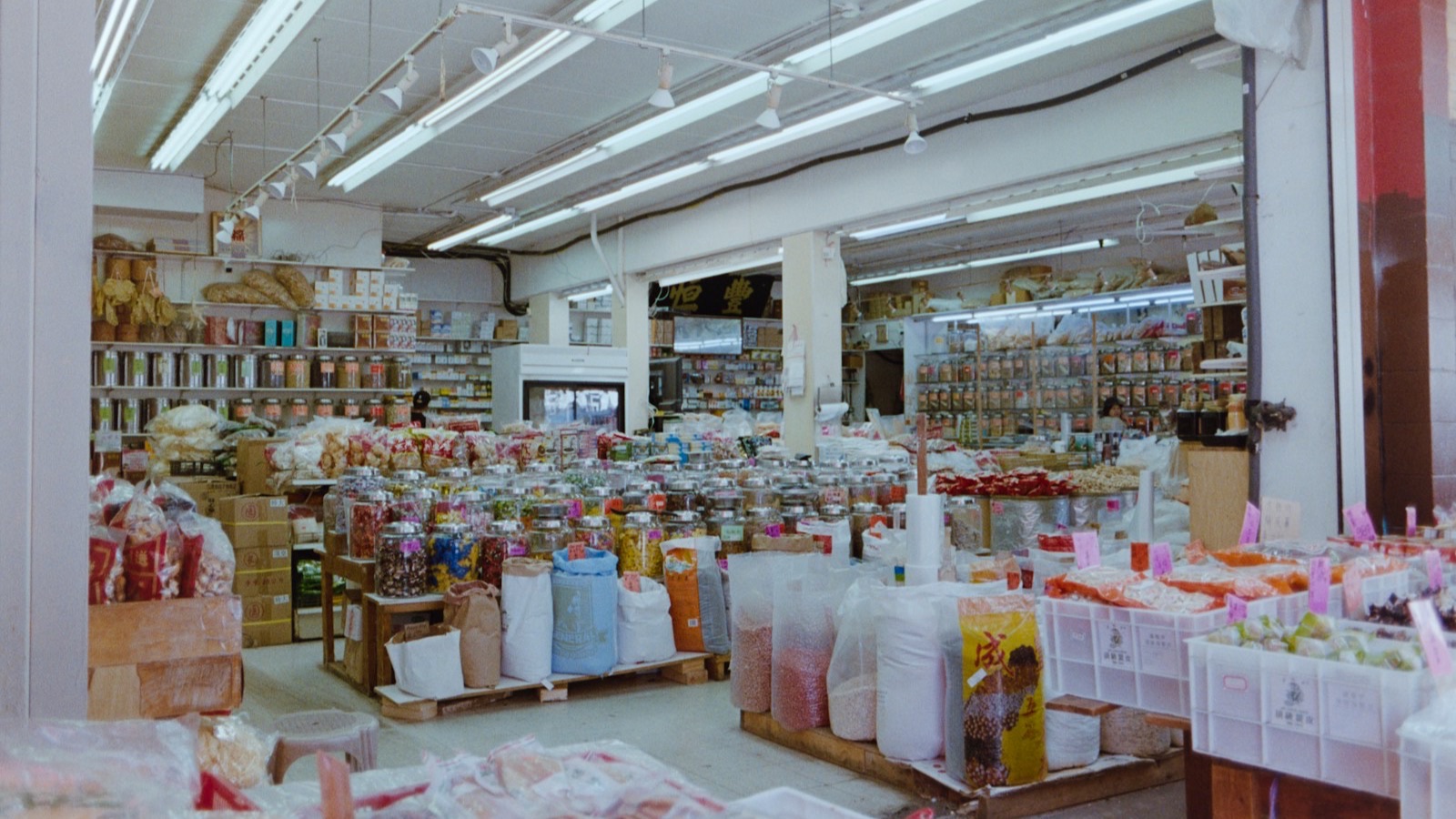
It’s late Saturday morning and the store is packed. Carts jockey at the ends of aisles, the deli line is a dozen deep, and you can feel the room tighten. This is the moment a supermarket quietly starts losing money — not to theft or pricing, but to friction. A crowded store is a stressful store, and stressed shoppers cut the trip short. The surprising part is that the music overhead has a measurable say in how that moment goes, and the obvious move is the wrong one.
The rule everyone repeats #
Almost every article about store music traces back to Ronald Milliman’s 1982 experiment — run, as it happens, in a supermarket. He found that slow-tempo music slowed the pace of shoppers and was associated with higher sales than fast music. That finding hardened into a rule of thumb: slow it down, people linger, people spend. For a quiet store with room to wander, that holds up well.
But Milliman’s study didn’t vary one thing that defines a real supermarket on a weekend: how many other people are in it. And when researchers tested that, the rule didn’t just weaken. It reversed.
Where the rule flips #
In 2017, Knoeferle and colleagues analyzed 43,676 shopping baskets across several European grocery stores, this time accounting for how crowded the store was at the time. In an empty or quiet store, the old logic roughly held. But under high social density — a genuinely crowded store — fast-tempo music significantly increased what people spent, reversing the spending dip that crowding normally causes.
And the lift had a specific shape: crowded shoppers under fast music bought more items, not more expensive ones. The music wasn’t talking them into premium choices. It was keeping them in the aisles long enough, and in a good enough mood, to finish the shop they came to abandon.
It's about stress, not pace #
The reason the rule flips is that tempo isn’t really doing what we think it’s doing. The slow-music story assumes the lever is walking speed — slower music, slower feet, more time in front of the shelves. But in a crowded store the binding problem isn’t speed; it’s stress. A packed aisle raises everyone’s arousal in an unpleasant way, and unpleasant arousal sends people toward the exit. Up-tempo music shifts that arousal toward something energizing rather than grating, and the shopper who would have bailed stays and finishes.
So the honest model isn’t “slow music sells.” It’s that tempo regulates the energy of the room, and the right setting depends entirely on what the room is doing. Empty and calm, slower can invite lingering. Packed and fraught, faster keeps people from giving up.
In an empty store, slow it down. In a packed one, speed it up. The same dial, set the same way all day, is wrong half the time.
What this means for your store #
A supermarket isn’t one environment — it’s a calm one at 10am and a crowded one at noon, and the tempo that helps in one actively hurts in the other. The single biggest mistake is the one almost every store makes: one setting, running unchanged from open to close, optimized for neither state. The lever the research actually supports is matching the music’s energy to the live condition of the floor, crowd included.
One honest caveat: this came from a set of European grocery stores, and it’s the energy-of-the-crowd mechanism that travels, not a precise dial you can copy. But the direction is clear, and it’s the opposite of the rule everyone repeats. The room tells you what it needs. Most stores just aren’t set up to listen.
The wider research record on tempo, arousal, and crowding is catalogued on the science page.