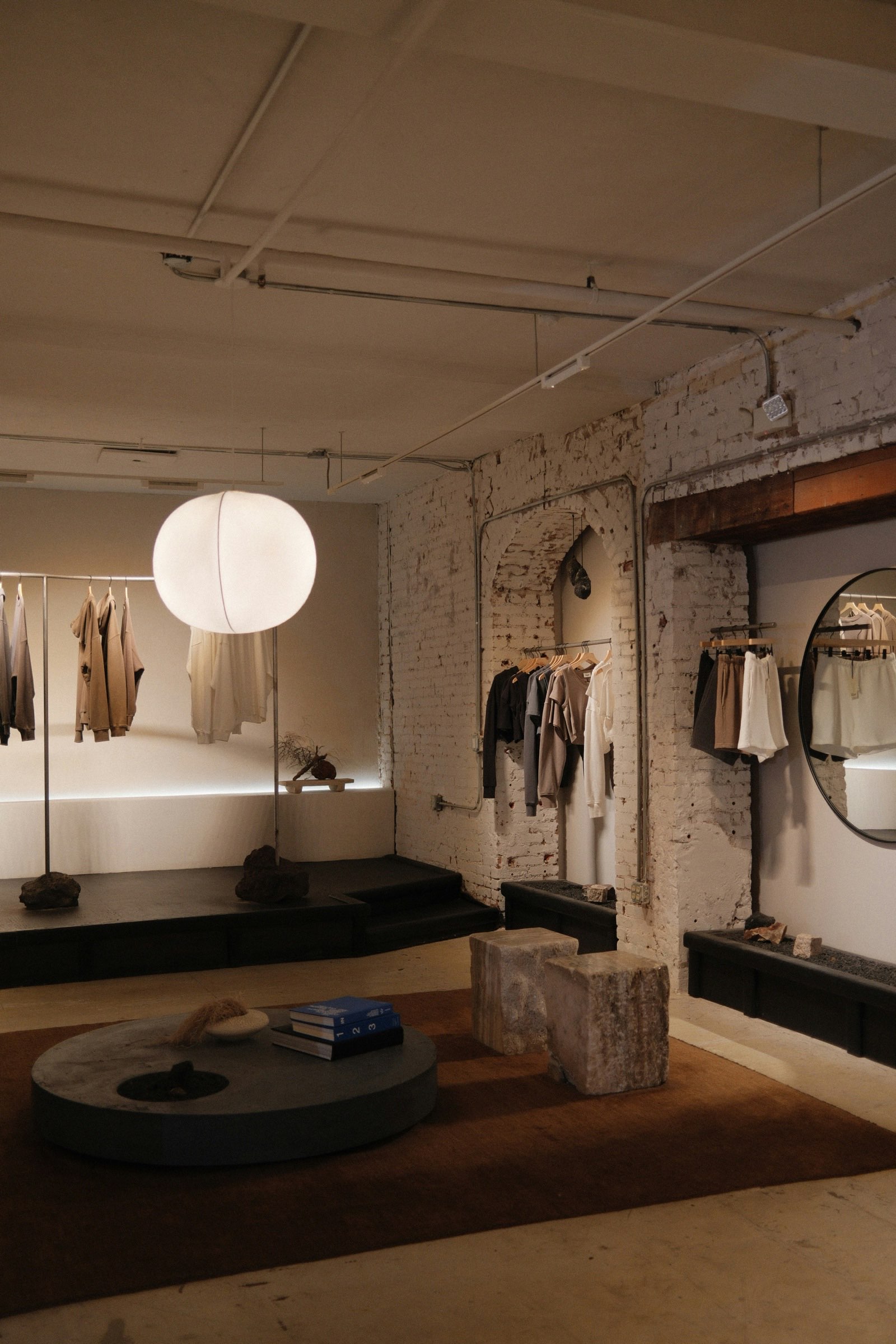
You walk into one of your locations on a Tuesday afternoon. The store looks right. The merchandising is clean. The lighting is warm. But something is off, and it takes you a second to notice: the music sounds like the lobby of a mid-tier hotel.
Your store manager picked a playlist that morning. Probably the same one from last week. It is fine. Nobody complained. But nobody lingered, either. The afternoon conversion numbers tell the same story they told last month.
What should a boutique actually sound like? #
Most of the published research on retail music was done in big-box environments. Grocery stores. Department stores. Wine shops with wide aisles. Ronald Milliman’s foundational 1982 study measured shopping pace in a supermarket. The findings were clear: slower music slowed customers down, and they spent more time in the store. Subsequent studies have replicated that effect in dozens of retail formats over four decades.
But a boutique is a different animal. Eight customers in 1,200 square feet. Fewer visual distractions. Higher price points. A purchase decision that is more emotional than logistical. In that kind of space, the audio fills the room differently. Customers are more exposed to it because there is less competing sensory input. The same music choice that disappears into the background at a Target becomes the loudest signal in a small specialty store.
That cuts both ways. Good choices register faster. Bad ones do too.
What the customer hears versus what you think they hear #
Areni and Kim ran a study in 1993 showing that classical music in a wine store pushed customers toward more expensive bottles without changing total units sold. North, Hargreaves, and McKendrick extended that in 1999 with a now-famous experiment: French music playing in a wine shop made French wine outsell German wine. German music reversed it. Customers surveyed afterward denied the music had any effect on their choices.
That denial is the point. Your customers are not making conscious evaluations of the playlist. They are absorbing an ambient signal that either confirms their perception of the brand or contradicts it. A customer who walks into a store that positions itself as curated and premium will spend differently depending on whether the audio reinforces that position. When the music clashes with the brand, the customer does not think “bad song.” The customer thinks “this place feels off.” Then the customer leaves, and your store manager never connects the two events.
The familiar-music trap #
Yalch and Spangenberg published a finding in 2000 that most store managers would rather not hear. Shoppers exposed to familiar music reported that more time had passed than shoppers exposed to unfamiliar music. The familiar tracks made the shopping experience feel longer, even when the actual elapsed time was identical.
In a boutique, that means your customer feels like she has been browsing for twenty minutes when she has been there for twelve. She wraps up and leaves. The familiar music created a time-compression illusion that worked against the one thing you needed: more time in the store, more items tried on, more chances to find a second piece.
Store managers default to recognizable songs because they feel comfortable. Comfortable for the manager. The research suggests they are comfortable in exactly the way that shortens visits.
If your customers recognize most of the songs, the music is probably shortening their visits.
Volume is simpler than you think #
Loud music makes people leave faster. Smith and Curnow documented this in 1966. Every replication since has confirmed it. The threshold is lower than most managers assume.
Here is a practical test. Stand six feet from a colleague and try to hold a conversation at a normal speaking volume. If either of you has to raise your voice, the music is too loud, and your store is pushing customers toward the door. Fast-fashion brands run louder on purpose because their model depends on rapid customer cycling. A boutique selling $200 dresses and $400 jackets needs the opposite.
What you can do this week #
Walk three of your locations this week during peak afternoon hours. Stand near the entrance for sixty seconds and listen. Ask yourself three questions. Does this music sound like it belongs in this store, or could it be playing in any retail space on the block? Can two customers have a conversation without raising their voices? Would your best customer, the one who spends $600 on a Saturday, feel like this store was made for her?
If the answer to any of those is no, your music is probably working against your merchandising, your brand, and your staff’s effort to close sales. The fix is not a better playlist. Playlists are guesses. The fix is treating audio the way you already treat lighting and visual merchandising: as a deliberate part of the store environment that someone is accountable for.
For more on retail audio for apparel and boutiques, see the apparel page. For specific levers to increase average transaction value in clothing stores, see how to increase average transaction value in clothing stores.