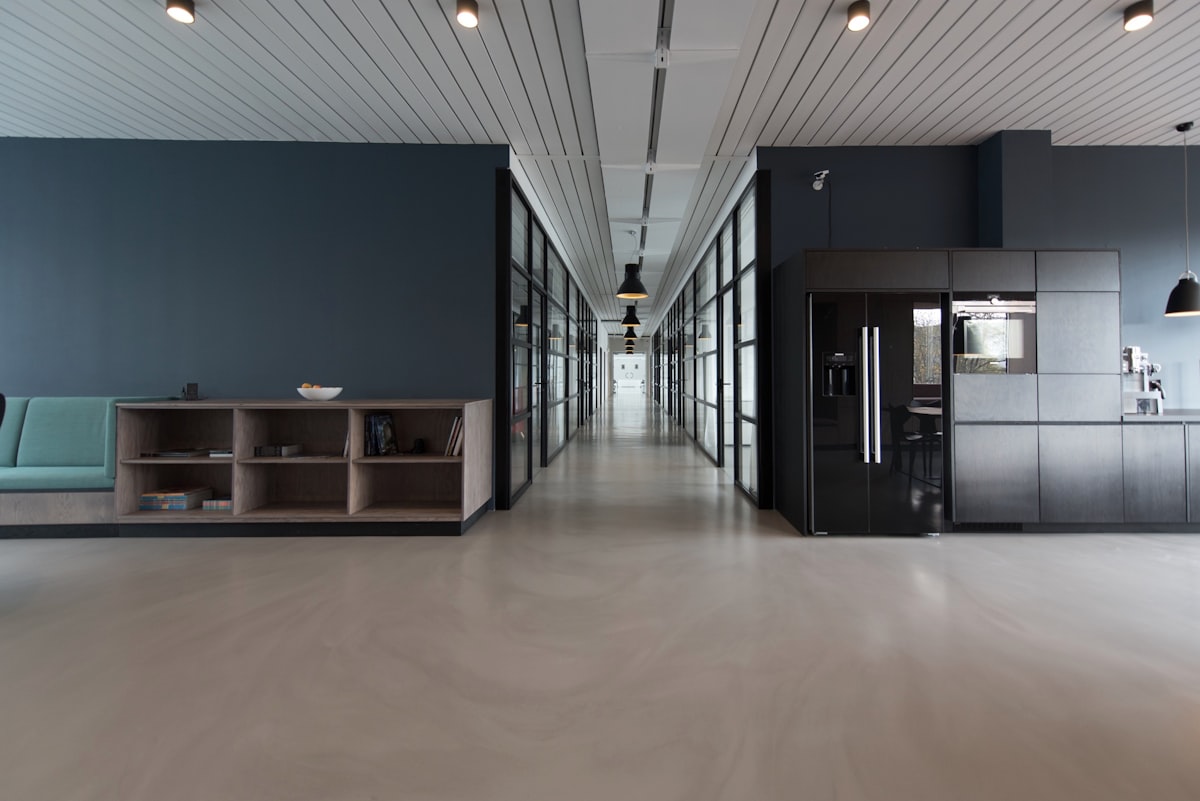
Walk any store you run and watch what happens in the first ten seconds.
A customer crosses the threshold. Their eyes adjust. Their shoulders drop an inch or they tighten up. They drift toward the left wall or they stop at the table up front. Every one of those micro-decisions is responding to something you put there on purpose. The fixtures. The sightlines. The scent. The lighting temperature. The greeter script.
Then there’s the music. Which is playing for reasons nobody at your company can actually explain.
What's the difference between art and design? #
Here is a distinction worth pulling on.
Art is the use of craft for self-expression. Design is the use of craft for an intended outcome. Same craft, different purpose. A painter painting what they see is making art. A painter painting what the museum’s director briefed them to paint for the lobby is making design. The brushwork looks the same. The reason for it does not.
Music gets called art by default, regardless of what it is actually doing. A song on a concert stage and a song playing while a customer decides whether to try on a jacket get the same word. They should not.
A film score has a brief. So does a toothpaste commercial. So does the music in your store, whether anyone wrote that brief down or not.
You have a visual merchandising team, a fixture team, a lighting spec, a greeter script, a scent program. Your soundtrack was picked by a rep at your vendor four years ago.
Your Store Is a Designed Space #
Walk through your flagship with the visual merchandiser. Listen to how they talk. The table at the front is there for a reason. The runner fixture is angled so the sightline from the door lands on the capsule you want to move. The mannequins are dressed to pull a specific customer deeper. Every decision is defended against the question: does this sell more, or does it not.
Now ask the same question of your audio. Who picked the soundtrack playing right now. When was it last reviewed. What does it do for this store, at this hour, with this customer in front of this fixture.
Most operators cannot answer any of those questions. The music is the one element in the store that got a pass on the defend-your-choice meeting. It is running because it has been running, and because nobody wanted to be the person who turned it off.
That is art posing as design. And it is costing something, even if you are not measuring it.
What Changes When You Treat It Like Design #
Stores that treat the soundtrack as part of the designed experience look different on the floor. The energy matches the hour. A Tuesday at 11am sounds different from a Saturday at 3pm, because the customer in front of you is different. The staff stops turning it off or sneaking their own playlist on, because they can stand to work in it. Customers stay a beat longer, because nothing in the room is actively pushing them out.
The research on this has been public for forty years. Ronald Milliman’s 1982 supermarket study found that tempo alone moved dwell and basket. The point is not the specific finding. The point is that operators have known for decades that music is a lever, and most of us have still been treating it like decoration.
That is the gap. The category you classified the music under determined how seriously you took it. Classified as art, it got ignored. Classified as design, it gets the same rigor as everything else on the floor.
What You Can Do This Week #
Three things, no vendor required.
First, walk your top store at the peak hour and your bottom store at the slow hour. Stand at the threshold for thirty seconds. Write down what the music is telling a customer to do. Leave fast, stay, browse hard, shop careful. Then ask if that matches what you want them to do.
Second, find out who actually chose your current soundtrack and when. If the answer is a sales rep at your music vendor in 2021, you have found the problem.
Third, put the music on the next store-walk agenda alongside lighting and visual. Defend it or change it, the same way you would any other element on the floor.
If a customer could rank the effort behind every element of your store, the music should not come last.
The deeper academic record on music and shopper behavior is catalogued on the science page.