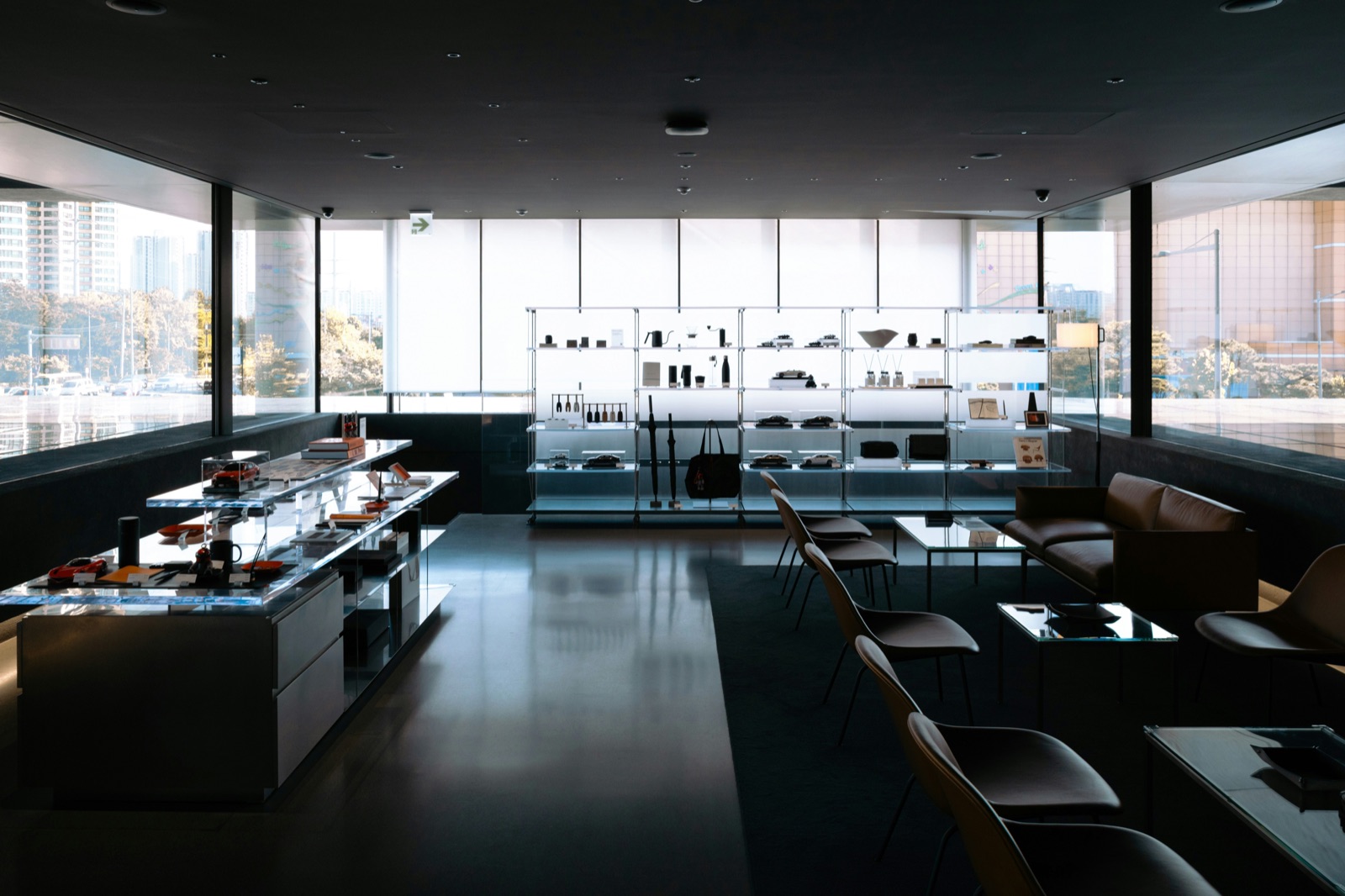
Walk into one of your stores on a Wednesday at 2 p.m. Stand near the front, close your eyes, and listen for thirty seconds. Nine times out of ten, you are hearing a song a songwriter wrote for a consumer on headphones, in a car, or at a bar. Not a song anyone wrote for a shopper picking up a $180 sweater at a distracted midweek moment.
Nobody who made that song ever stood in your store, looked at your product, thought about your customer, or wrote the music to match. Most retail operators have never stopped to look at the distance between what the song was for and what the song is doing in the aisle.
Who was your store's music actually made for? #
Songwriters in Nashville write tracks hoping a bigger artist covers them or a streaming royalty pays the rent. Producers in Los Angeles shape records to work on phone speakers and in gym playlists. Labels market the whole thing to people on a couch, in a Subaru, or on a run.
None of them asked what mood a shopper should be in at the moment she decides whether to keep walking or reach for the hanger. That question has never been in the brief for any song in your rotation.
A catalog licensing company then bundles a few million of those songs, stamps a label on the bundle like “upscale boutique” or “Tuesday afternoon lounge,” and sells it to retail chains. Inside the bundle are songs people wrote for everything except the store.
Why retail settled for this #
In 1934 a retired general named George Squier founded Muzak and talked office-building owners into piping prerecorded music through elevator speakers. The point was to cover silence. Ninety years later the default retail approach is still the same. You pay a vendor, you get a stream, you stop thinking about it.
Every other industry that takes music seriously stopped thinking that way a long time ago. Churches pick hymns for what the hymn does to the congregation. Film composers score a scene beat by beat to match the director’s intent. Concert tours map a set list to the arc of the night. All of them treat music as a tool with a specific job in a specific room.
Retail got Muzak, then Mood Media, then a thousand “playlist for your vibe” apps. Most operators have never asked a harder question than “is it the right genre.” The genre question is not the one that matters.
You can walk into any store in a mall and within ten seconds tell whether anyone has thought about the music. You can almost always tell that nobody has.
How a retail operator tells if the music is a problem #
You do not need a measurement platform for this. You need a Wednesday afternoon and your own ears. Walk three of your stores on the same day, one after the other. Listen the way a customer listens, which is passively, from the moment you open the door.
Four questions in each store.
One. Did I walk into a stream, or did the music change when I arrived? A stream means nobody thought about the first ten seconds of a customer’s visit. In those ten seconds the customer decides whether this is a store worth slowing down in.
Two. Does the music belong to my customer, or to a generic idea of retail ambiance? A 42-year-old buying a gift for her mother did not grow up on Bossa Nova Forever Volume 14. If your store sounds like a hotel lobby, you are speaking a language your customer does not speak.
Three. Is the music keeping people in the store, or pushing them out? You do not need a stopwatch to notice a track that makes you want to leave the room yourself.
Four. Would my staff turn this off the second the manager left? If yes, your staff is telling you something your vendor will not. Staff rebellion against the in-store music is one of the clearest signals that what is playing is wrong for the room.
Three stores, four questions, one afternoon. You will learn more about whether your music is hurting sales from that walk than from any report your provider has ever sent you.
What changes when the music was made for the store #
Generative music production has changed what a retailer can ask for. A store can now play original music a composer built to match the actual customer walking in, the actual hour of the day, the actual pace the operator wants on the floor. No catalog. No licensing gymnastics. No inherited intentions from a songwriter who has never seen your aisle.
Entuned builds music for the store — not from a catalog. Entuned Free is open to start, no credit card required.
The full picture of how Entuned differs from catalog providers is on the why page.