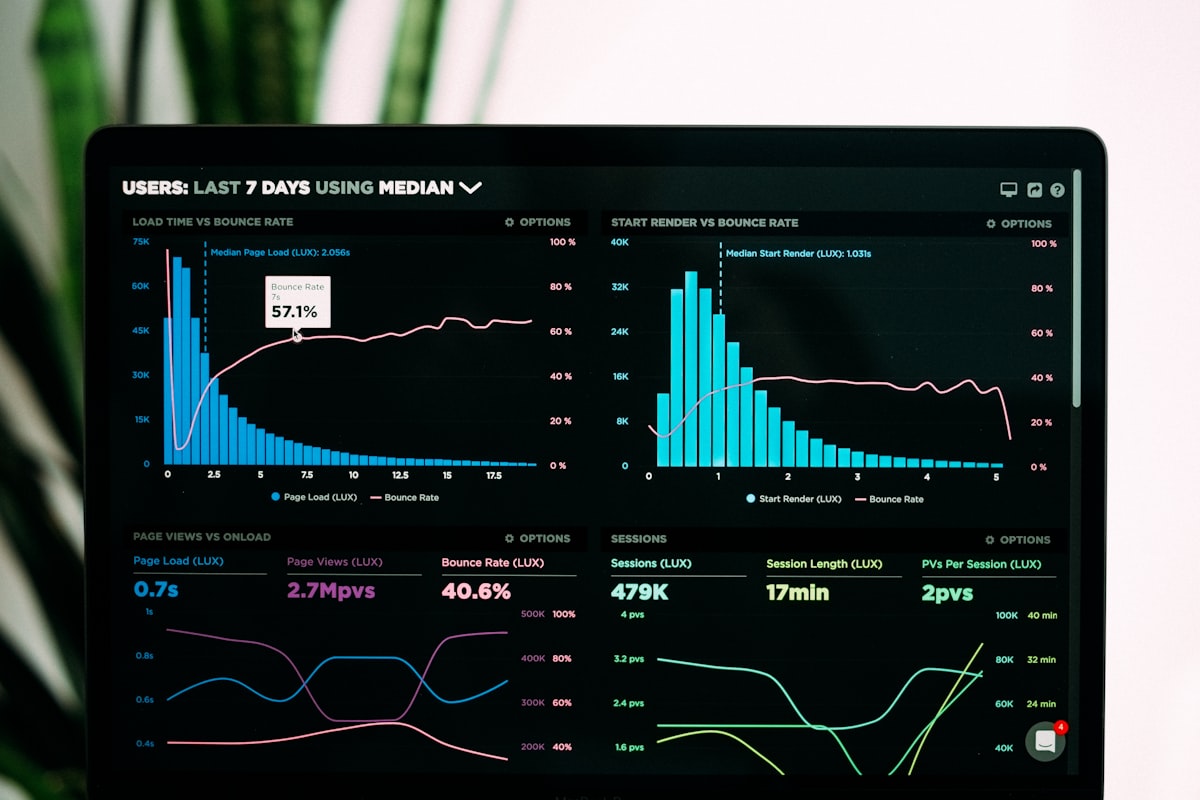
You have heat maps. You have people counters. You have POS correlation and zone-level analytics that tell you where customers walk, where they stop, and where they leave. Your Monday meeting covers layout changes, staffing density, seasonal patterns, promotional placement, and window displays. Every quarter, someone presents a new dashboard with a new way to slice dwell time data.
Nobody brings up the music. The Monday meeting skips it. The QBR skips it. The store visit debrief skips it.
Why isn't anyone tracking audio's effect on dwell time? #
The research connecting music to dwell time is among the most consistently replicated findings in retail psychology. Smith and Curnow published the first volume study in 1966. Ronald Milliman demonstrated in 1982 that slower-tempo music correlated with customers spending more time in grocery stores and buying more per visit. Dozens of studies since have confirmed and extended those findings across store categories, countries, and decades.
The effect is real. It is large enough to move your numbers. And it is almost certainly missing from your analytics.
The reason is straightforward. The music in most stores never changes in a way that would let anyone isolate it as a variable. The same licensed playlist runs at the same volume with the same tempo range, day after day, Tuesday through Saturday, January through December. When the music is a constant, it disappears from every variance report your analytics team produces. Nobody can see what never moves. Your analytics platform is doing exactly what you asked it to do. It is looking for things that change. The audio never did.
When the music is a constant, it disappears from every variance report your analytics team produces.
What operators find when they run the test #
The stores that have tested music as an independent variable find effects worth paying attention to. Milliman’s 1982 grocery study showed a 38% increase in gross sales receipts when tempo was slowed. More recent work across apparel and specialty retail has confirmed that music congruent with a store’s target customer correlates with longer visits and higher basket size.
These are not marginal signals buried in noise. They are large enough that operations leaders who run controlled comparisons across locations come away wondering why they waited.
But most operations teams never get to that question, because the variable was never on the board. Conversion rate is on the board. Average ticket is on the board. Traffic count, staffing ratio, shrink rate, return rate, store-level NPS. All measured. All reviewed. All adjusted when the numbers move.
Audio sits in the same category as HVAC temperature: something someone set once and forgot. Except HVAC has a thermostat and a maintenance schedule. Your music provider sends you a playlist and a monthly invoice, and nobody checks whether the two are connected to anything happening on the floor.
The variable hiding in your ceiling speakers #
Most operations leaders have squeezed the obvious dwell time levers. Layout has limits. Staffing ratios have limits. Merchandising has been refined for years. The audio environment is probably the last high-impact variable that no one on your team has treated as a variable at all.
And that creates an asymmetry worth noticing. Every other variable your analytics team tracks has been measured, adjusted, and improved over time. Layout gets tested. Signage gets tested. Staffing models get refined. Audio has been sitting at whatever value it accidentally landed on when someone picked a playlist and forgot about it.
Think about what that means across ten or twenty locations. Every store is running the same static audio, regardless of customer mix, time of day, traffic pattern, or season. A Tuesday morning shopper and a Saturday afternoon browser hear the same thing. Your highest-performing store and your most struggling location hear the same thing. That is the gap you close when you start measuring.
One thing you can do this week #
Walk three of your stores on the same day. Note what is playing, how loud it is, and whether it matches the customers in the store at that hour. Ask the store manager when the music was last changed. In most cases, nobody will remember. That is your answer. You have a variable that has been held constant for months or years, and no one has ever asked whether moving it would move your numbers.
Sixty years of published studies say it would. The only question left is by how much, for your stores, with your customers.
For the broader picture of why retail analytics has a response-layer gap, see why Entuned exists. If you want practical levers for extending how long customers stay, see how to increase dwell time in retail stores. And for how those longer visits translate into a higher close rate, see the levers that lift retail conversion.