This is Part 4 of the Sound Check series, exploring the science and structure behind retail music.

Walk into a well-designed retail space and count the decisions someone made before you arrived.

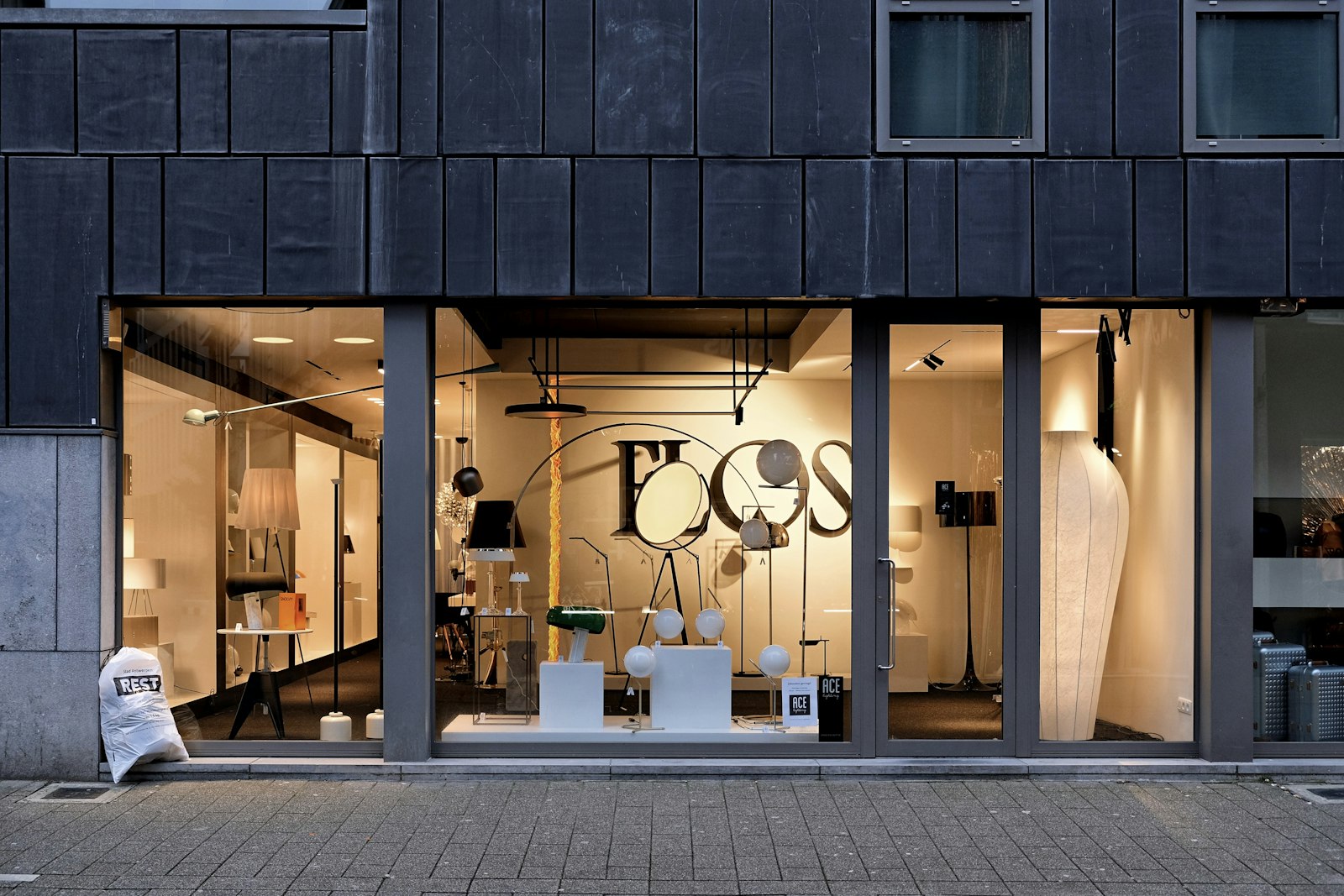
The lighting hits at a specific color temperature. Somebody chose that number. The fixtures sit at heights calculated to guide sightlines toward focal merchandise. The floor plan channels traffic through a sequence that puts discovery before destination. The color palette on the walls went through rounds of review, probably with brand guidelines open on someone's laptop. If there's a scent, it was selected from a vendor catalog, diluted to a target intensity, and diffused through an HVAC system on a timed schedule.

Every one of those inputs got specified. Documented. Reviewed. Revised.

Now: what's playing on the speakers?

Somebody's Spotify playlist, maybe. A licensing service set to "chill." Whatever the morning manager felt like. The answer, in most retail environments, is that nobody specified the music with anything close to the rigor they applied to the paint color. And that gap between intention and neglect is stranger than it looks, because the research on music's effect in commercial environments is older and more robust than the research behind half the design decisions retailers already take seriously.

The Toolkit That Already Includes Music

In 1974, Philip Kotler published a paper in the Journal of Retailing that gave this whole category a name. He called it "atmospherics," and he defined it as the conscious design of space to produce specific emotional effects in buyers. Not decoration. Not ambiance. Deliberate environmental design aimed at influencing behavior.

Kotler laid out four sensory channels: visual, auditory, olfactory, and tactile. Music was in the original toolkit. It has been sitting there, explicitly named, for fifty years. The theoretical foundation for treating music as a design variable is not new or speculative. It predates the modern visual merchandising industry.

That same year, Mehrabian and Russell published their model of environmental psychology, built around three emotional dimensions: pleasure, arousal, and dominance. Their argument was straightforward. Environmental stimuli produce emotional states in the people exposed to them, and those emotional states predict behavior. Specifically, they predict approach or avoidance. A person in a positive emotional state moves toward: they explore more products, spend more time, interact more with staff, spend more money. A person in a negative state moves away.

This is not a loose metaphor. Donovan and Rossiter took the Mehrabian-Russell model into retail stores in 1982 and tested it directly. They confirmed that the emotional states produced by store atmosphere mediated shopping behavior. The environment shaped how people felt, and how people felt shaped what they did. Including what they bought.

Music sits squarely inside that mechanism. It is one of the environmental inputs that shifts the pleasure-arousal balance. The research confirmed this over forty years ago. And yet most retailers treat music with less intentionality than they treat shelf talkers.

Why Single-Channel Thinking Sells Short

Here is where the research gets more interesting and more inconvenient.

Mattila and Wirtz published a study in 2001 that looked at what happens when you combine atmospheric elements. Specifically, they tested scent and music together. When the arousal levels of the scent and the music matched, consumer evaluations were significantly higher than when either element was presented alone or when the two were mismatched. Congruence between channels produced a measurably better response than any single channel in isolation.

Spence and colleagues reinforced this in 2014, arguing that human perception is fundamentally multisensorial and holistic. People do not experience a store's lighting separately from its music separately from its scent. They experience it all at once, as a single environment. The brain integrates those inputs before conscious evaluation even begins.

A retailer who specifies lighting, scent, visual merchandising, and layout with precision but leaves music unspecified is building a multi-sensory environment with a hole in it. The unmanaged input interacts with every managed one, and the interaction is not neutral.

This means something practical. The other channels are doing coordinated work. Music is doing whatever it happens to do. That unmanaged input interacts with every managed one. Mismatched arousal between music and the rest of the environment does not just fail to help. The Mattila and Wirtz data suggests it actively degrades the experience those other investments were designed to create.

You can spend real money on scent strategy. You can hire a lighting designer. And a random playlist can work against both of those investments simultaneously, because nobody thought to specify the music at the same level.

The Evidence Is Not the Problem

Turley and Milliman published a review in the Journal of Business Research in 2000 that surveyed decades of atmospherics research. They found statistically significant relationships between atmospheric variables and consumer behavior across study after study. The pattern was consistent. The evidence base was large. Their conclusion was not that more research was needed.

What Turley and Milliman noted, and what remains true today, is that a gap exists between what the research demonstrates and what practitioners actually do. The evidence for music as a behavioral variable has been accumulating since the 1970s. Retailers have had access to this research for the entire lifespan of modern store design. The gap is not a knowledge problem. The studies are published, cited, and available. The gap is a specification problem.

Lighting got promoted from "turn the lights on" to a design discipline with its own consultants, technologies, and line items in the construction budget. Scent followed a similar path. Music, for most retailers, is still sitting in the "turn the lights on" phase. Something that needs to exist, handled by whoever is nearby, without a spec.

What Specification Actually Looks Like

The research points to specific variables that matter. Tempo. Mode. Genre congruence with brand identity. Arousal level matched to the desired behavioral outcome and coordinated with other sensory inputs. Volume calibrated to the space, the time of day, the customer density. These are not abstract qualities. They are measurable, adjustable parameters, the same kind of parameters that lighting designers and visual merchandisers work with every day.

The capability to treat music this way, to specify it with the same precision retailers already apply to other atmospheric variables, is becoming real. What has been missing is not the research justification. That has been in place for decades. What has been missing is the operational infrastructure to turn research into practice at scale, to move music from a felt sense to a controlled input.

That infrastructure is starting to exist.

The Question That Is Already Answered

There is a version of this conversation that asks whether music affects consumer behavior in retail environments. That question was answered empirically in 1982. Donovan and Rossiter closed it. The decades of research since then have only added resolution to a picture that was already clear.

The real question is narrower and more practical. Are you specifying your music, or are you letting it happen?

Every other sensory input in your store has a spec. Somebody chose the light temperature. Somebody approved the scent. Somebody laid out the floor plan with traffic flow in mind. If your music is the one atmospheric variable that nobody specifies, you have an uncontrolled input interacting with every controlled one. The research says that interaction matters. It has been saying so for fifty years.

The paint color has a spec. The music should too.

Related reading: Sound Check: The Science You're Already Ignoring, Retail Atmospherics in 2026, and The Metrics Your Audio Environment Should Be Producing.

Key Takeaway: If your lighting, scent, and layout all have a spec but your music does not, you have an uncontrolled input working against every controlled one.

Daniel Fox is the founder of Entuned, where he builds music systems engineered for retail customer psychology. Background in music theory, behavioral research, and data-driven product design. More about Daniel

Lighting has a spec. Scent has a spec. Your music should too. Entuned specifies music at the parameter level and measures what it produces.

Ask About a Pilot Program