Every owner-operator of a small retail store has had the conversation with themselves at 2pm on a slow Tuesday. Three customers in the store. Six on Amazon’s homepage right now. The math feels impossible.
It is not impossible. It is only impossible if you are trying to beat Amazon at being Amazon. You will not. Amazon has more selection, faster shipping, lower prices on commodity goods, and a recommendation engine that has watched the customer for a decade. Compete on those four and you will lose every Tuesday afternoon for the rest of your operating life.
The retail store has six advantages that online shopping structurally cannot replicate. They are not nostalgia. They are mechanical. Each one is a thing your floor can do that no website can do at all. The question is not whether they exist. The question is whether your store is leaning into them on purpose, or whether the customer is supposed to figure them out for themselves.
What can a retail store do that online shopping cannot? #
Six things, in roughly the order operators underweight them.
First, the customer can handle the product, see its actual size, feel its actual weight, and know in twenty seconds what an online photo grid cannot tell them in twenty minutes. Second, the customer can talk to a person who knows the inventory and the category, and can answer a real question in the moment. Third, the customer is inside an environment — light, sound, scent, layout — that primes how they feel about the purchase. Fourth, the customer leaves with the product in their hand right now. Fifth, the customer is exposed to product they were not searching for and may discover something they did not know they wanted. Sixth, the customer is in a place — a place with regulars, a place with a vibe, a place that exists in a specific neighborhood with specific other places — and the visit is itself a small social and cultural event.
Each of these is a real advantage. Each one is leaking out of most independent stores not because the operator does not have it, but because the operator has not made it obvious to a customer who could have stayed home and clicked instead.
Lever 1: The handle-it advantage #
Online photography has gotten very good. It has not gotten good enough to tell a customer how a sweater drapes, how a knife handles, how a candle smells, how a pair of running shoes feels when their actual foot is inside.
The first decision a customer makes about most non-commodity products is a sensory one — does this feel right in my hand, on my body, in my space. Online stores have to engineer around the absence of this signal with reviews, return policies, and unboxing videos. Your store has the signal itself. The leak happens when product is hidden behind glass, locked in cases, stacked in original packaging, or merchandised in a way that discourages handling.
Make the product available. Make handling easy. Customers who handle the product convert at materially higher rates than customers who only look at it.
Lever 2: The expertise advantage #
A customer with a real question — “which of these will work for my apartment,” “which of these is right for someone with sensitive skin,” “which of these will hold up to my dog” — does not get a useful answer from an Amazon Q&A thread written by anonymous reviewers two years ago. They get a useful answer from a human who has handled the product, talked to a hundred other customers in the same situation, and has an opinion shaped by that.
This is the most underused advantage in independent retail. The associate is on the floor. The customer is in the store. The expertise is in the room. The conversation simply does not happen often enough because the staff training over-indexes on greeting and inventory and underweights the part where the associate forms and shares a real opinion.
Train staff to have opinions. Train them to ask one diagnostic question — “what are you trying to solve” — instead of one transactional question — “are you finding everything okay.” The expertise advantage activates the moment the conversation starts.
Lever 3: The atmosphere advantage #
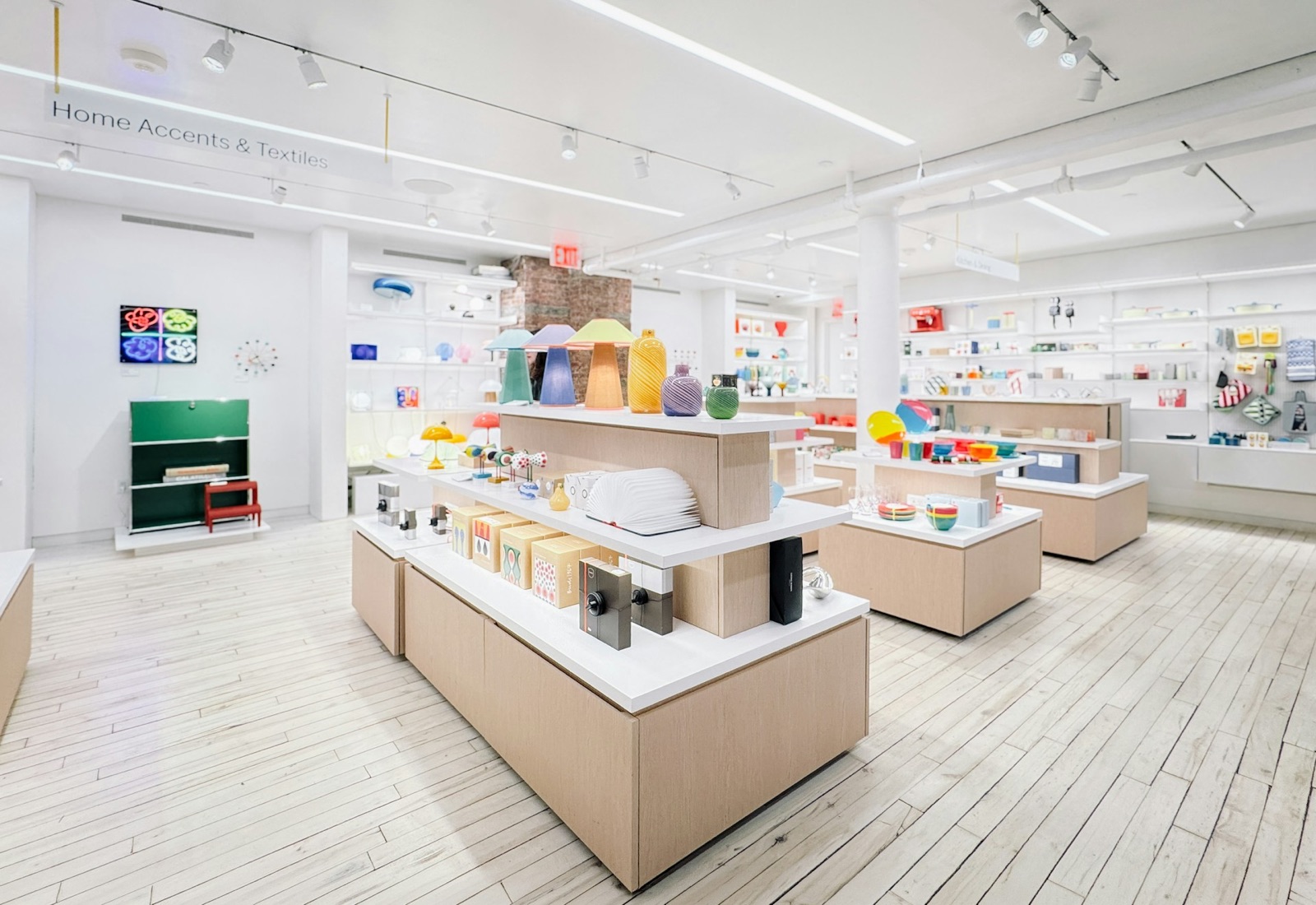
The customer is inside an environment. The website is a flat product grid on a phone in their kitchen. Light, sound, scent, layout, temperature, pacing — all of these are doing work on the customer’s mood, their willingness to pay, their pace through the store, their sense of what kind of place this is and what kind of person they become while they are inside it.
Forty years of peer-reviewed research is direct on this. Music that fits the customer lifts what shoppers spend; music that does not fit lands level with no music at all (North, Shilcock and Hargreaves 2003). Tempo controls the pace customers move through the floor (Milliman 1982). Matched music even steers which products customers choose, and they deny it moved them (North, Hargreaves and McKendrick 1999). Scent, lighting, and color have parallel literatures. The atmosphere is doing measurable work on what the customer does in the room.
Of the six advantages, this is the cheapest one to tune deliberately. Most operators treat it as ambient — whatever the music vendor sent over, whatever the bulbs in the fixtures came as, whatever the previous tenant left behind. The lever is there. It just is not being pulled.
Lever 4: The immediacy advantage #
The customer leaves your store with the product. They do not wait two days. They do not stalk the FedEx tracking page. They do not have to be home for delivery. They do not have to file a claim if it shows up damaged.
This advantage compounds with intent. A customer who walked in needing the product today is locked-in to the physical channel. A customer who is browsing has already decided the trip was worth the time. The immediacy advantage is doing work for you in both cases — but it is invisible if your store does not make it obvious. Signage on the door, signage at the counter, signage in the window. “In stock. Take it home today.” The customer should not have to assume.
This is the cheapest signal of the six to add. Most stores have not added it. Online retailers signal availability constantly. Independent stores assume the customer knows.
Lever 5: The discovery advantage #
Amazon shows the customer what they searched for. Your store shows the customer everything they did not search for and might want.
Serendipity is a real retail mechanism. The customer came in for a sweater and saw a bag they did not know they wanted. The recommendation algorithm cannot replicate this — recommendation engines optimize for things adjacent to what the customer already showed interest in, which means they collapse toward the customer’s existing taste graph instead of expanding it.
The discovery advantage activates when your floor merchandising surfaces unexpected adjacencies. Cross-category displays. Story-led featured sections. Buyer’s-pick walls. The customer should leave the store knowing about three products they did not know existed when they walked in. That is your retention strategy and your basket-size strategy in the same lever.
Lever 6: The community advantage #
Your store is in a place. The place has a neighborhood. The neighborhood has other stores, other customers, other rhythms. Customers come in not just to buy product but to be in the place, to see who else is there, to be recognized by the staff, to participate in a small ritual of local life.
This is the advantage that takes the longest to build and the hardest to fake. Regulars who know each other. Staff who remember names. Events in the store. Visible local ties. None of this exists online and none of it can be retrofitted in a quarter. But every operator who has been in their location for more than a year already has the beginnings of it. The leak happens when the operator does not invest in the relationship layer because they are too focused on the transaction layer.
The community advantage is what makes a retail store sticky in a way no website can be. It is also the advantage most independent operators undervalue because they are too close to it to see it.
You will not beat Amazon at being Amazon. The good news is that Amazon will not beat you at any of the six things your store can do that a website cannot.
Which advantage is your store leaning into? #
A useful diagnostic. Stand outside your store on a Saturday afternoon for ten minutes. Watch customers walk in. Then walk in yourself, slowly, like a customer who has never been there before.
Of the six advantages — handle-it, expertise, atmosphere, immediacy, discovery, community — which two does your store make obvious in the first sixty seconds? Which two are visible if the customer asks? Which two are essentially invisible unless the customer already knows the place?
Most independent stores lean strongly into one or two and leak the other four or five. That is the gap. The fix is not to do all six perfectly, which is unrealistic. The fix is to identify the two leaking the loudest and make them obvious in this quarter.
Where to start this week #
Three actions, in order.
Walk your store as a stranger. Stand outside for ten minutes. Watch what customers see and do. Walk in slowly and pretend you have never been here before. Note which of the six advantages are obvious in the first sixty seconds and which are invisible. The list of invisible advantages is your starting point.
Pick the cheapest leaking advantage to fix first. Atmosphere is almost always the cheapest because it has no inventory cost, no hiring cost, no fixture cost. The audio environment is the cheapest part of atmosphere because it is changed in software, not concrete. If atmosphere is leaking and audio is the obvious gap, that is your two-week test.
Run a free audio pilot. Entuned Free gives you mood-tuned music for no credit card, no time limit. Pick the mood mode that fits your floor. Run it for two weeks. Pull conversion, basket, and dwell from your POS at the end. If the numbers move, you have evidence that the atmosphere advantage is real for your customer profile and worth deepening. If they do not, you have learned that audio is not the binding leak and you can re-allocate to one of the other five advantages without spending capital first.
For the dwell-time side of how customers behave once they are inside, see how to increase dwell time in retail stores. For the conversion question of why they don’t buy, see retail conversion rate: the five levers. For why customers walk back out without buying, see why customers leave your store without buying. The full pricing page walks through what each tier includes.