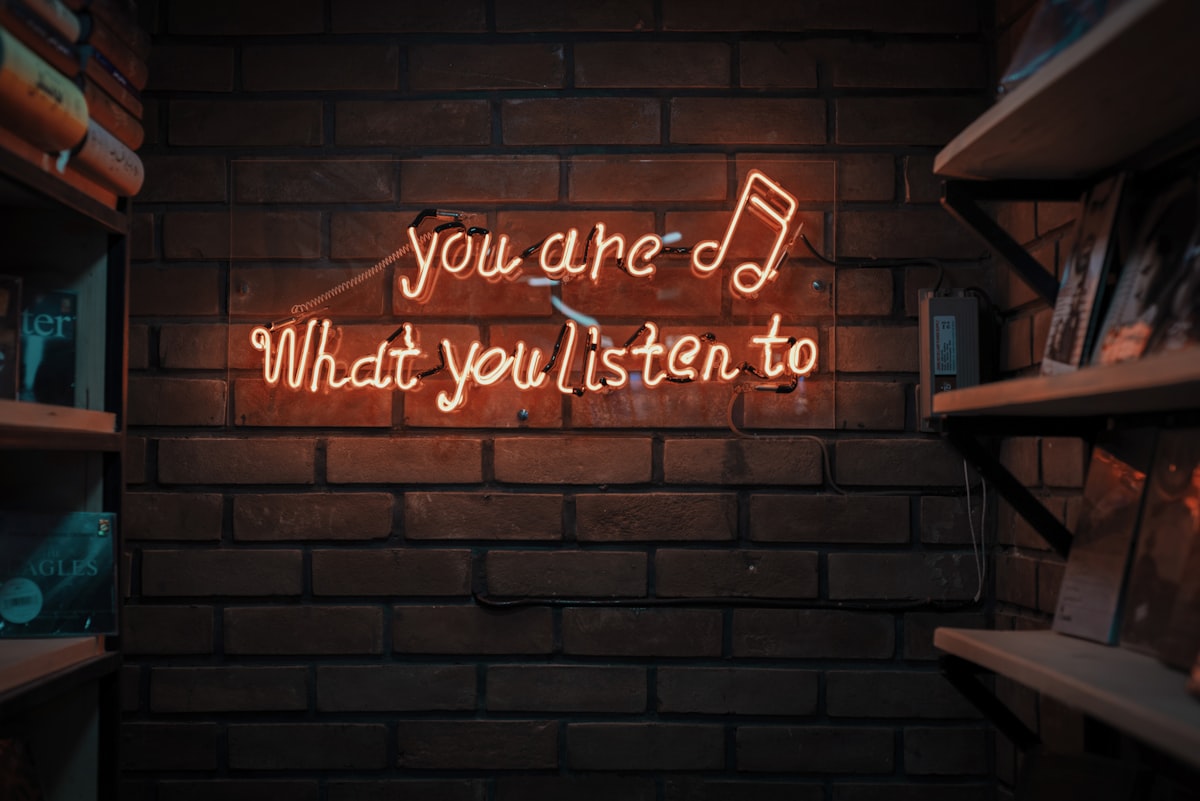
I was standing in a store last month. The kind of place that sells $200 candles and wants you to feel good about it. A song was playing through the ceiling speakers, loud enough to hear every word. The chorus kept repeating the word “mistake.” Belted, impossible to tune out.
Customers were browsing shelves, picking things up, putting them back. Deciding. And the room was telling them, over and over, that something here was a mistake.
Nobody in that store chose that song. Nobody approved the lyrics. Nobody screened it for what it was actually saying to the people holding merchandise and thinking about price. The song was just in rotation. And for three and a half minutes, it was the loudest claim the brand was making about itself.
Is your store music actually selling against you? #
Retail operators spend months on visual merchandising. They test lighting. They debate fixture placement. They obsess over the window display. Then they hand the audio to a subscription service and never think about it again.
The research on what happens next is not ambiguous. North, Hargreaves and McKendrick (1999) found that the right music steers what customers choose — and that shoppers denied it had any effect on them. North, Shilcock and Hargreaves (2003) found that prestige-fit music lifted spend per head, while music that did not fit landed level with no music at all. Areni and Kim (1993) found the same direction on price: when the music fit the setting, shoppers reached for more expensive items, not more of them. When the music does not fit, that lift is what you forfeit.
The customers in North’s wine study did not believe the music had influenced them. Asked directly, almost none said it had. The effect showed up in what they chose, not in their conscious awareness. People process background audio below the threshold of attention, especially when they are distracted, rushed, or comparing options. A retail floor is all three of those conditions at once.
What the Music Is Actually Saying #
Every song playing in your store is making claims about your brand. The genre signals a cultural identity. The tempo sets a pace. The lyrics name specific ideas, associations, emotions. Those claims land whether or not anyone is paying attention to them. In a retail environment, where customers are already under cognitive load and making rapid judgments, the audio has an outsized role in shaping perception.
Think about the menswear store targeting professional men around 40, playing a late-90s R&B track about two women fighting over a man. The genre did not match the brand. The cultural reference point did not match the customer. The lyrical content had nothing to do with anything the store was trying to communicate. Every dimension of fit was broken at the same time.
Nobody chose that song for that room. The playlist provider loaded a “men’s retail” channel and moved on. And for the length of that track, the store was broadcasting a message that contradicted everything the visual merchandising was trying to say.
The song playing in your store right now is making a claim about your brand. You should probably find out what it is.
How to Tell If Your Music Is Working Against You #
Most operators have never done this. Walk into one of your stores this week at a time when you normally would not be there. Stand near the entrance for two minutes and listen. Write down the first three things the music makes you think about. Then ask yourself whether any of those things have anything to do with the brand you are trying to build or the customer you are trying to reach.
Pull up the lyrics of whatever is playing. Read them. Ask whether you would approve those words as ad copy for your store. If the answer is no, consider that your customers are hearing those words right now, in the same room as your merchandise and your price tags.
Then ask your music provider for a report on what has been playing. Most will not be able to give you one that includes lyrical content or brand-fit analysis. That gap tells you something worth knowing about how seriously they treat the audio in your stores.
The Audit You Can Run This Week #
Pick your highest-performing store and your lowest-performing store. Visit both during peak hours. Spend ten minutes in each one just listening. Write down what you hear. Compare the lyrics, the tempo, the genre, the overall feel against what your visual merchandising team spent weeks building. If the two are telling different stories, you have found a variable that most of your competitors have never even thought to measure.
Sound Check is a five-post series. Its framing connects to why Entuned exists.